
By Benedicta Naa Odarkor Ablateye, Communications Officer, ACEPA
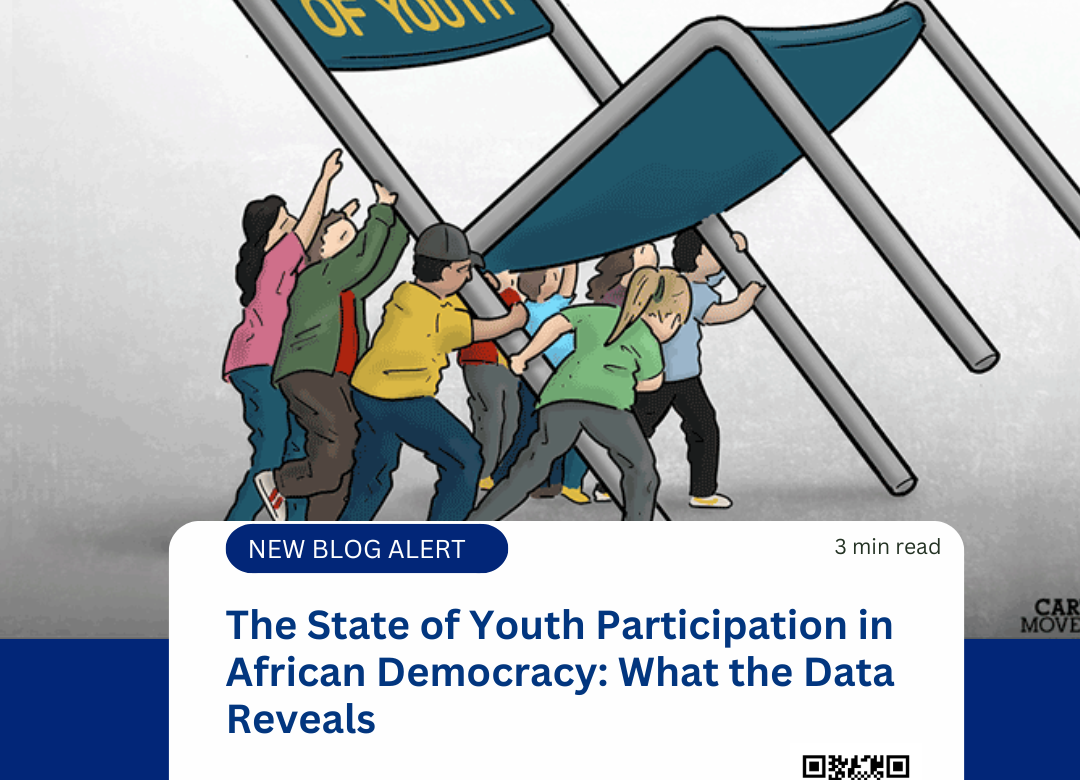
Africa is the world’s youngest continent. Young people are not merely the future of African democracy; they are its present. Yet despite their overwhelming demographic strength, youth remain significantly underrepresented across nearly every formal measure of political participation, from parliaments and party leadership structures to voter turnout.
This underrepresentation is not simply the result of apathy. The data tells a far more complex story: one in which young Africans, frustrated by formal political institutions, are increasingly turning to alternative and innovative forms of civic engagement, sometimes reshaping national political conversations almost overnight.
This article examines what the numbers reveal, why they matter, and what they suggest about the future of democracy across the continent.
Underrepresentation in Political Leadership
The disconnect between Africa’s youthful population and its political leadership is particularly visible in national parliaments. Young people account for roughly 400 million Africans between the ages of 15 and 35, representing 35% of the continent’s population. Yet political leadership remains overwhelmingly dominated by older generations. Most African presidents are over 60, while youth representation in legislatures remains consistently low.
In Ghana, often regarded as one of Africa’s more stable democracies, analysis of the 9th Parliament shows that only 17.1% of Members of Parliament are aged 40 or younger as of early 2025, while none are aged 30 or below. Kenya presents a similar picture: 19.5% of MPs are aged 40 or younger, and only 2% are under 30.
The barriers facing young aspirants are remarkably similar across countries. Exorbitant campaign costs entrenched political party systems that favor established figures, limited mentorship opportunities, and exclusion from candidate selection processes continue to restrict youth access to political office.
Youth Voter Participation on the Decline
Low representation in leadership is mirrored in electoral participation. Research combining Afrobarometer surveys with country-level data across 19 democratic African countries shows that young people vote less frequently than older citizens and tend to feel less attached to political parties.
Although this trend reflects broader global patterns, its implications are particularly significant in Africa, where the youth population continues to expand rapidly.
In Ghana’s 2024 elections, for instance, reports indicated that voter apathy was highest among young people. Afrobarometer’s 2025 flagship report, based on 53,444 interviews conducted across 39 countries, similarly found that women and youth remain less engaged than older generations and men in many traditional forms of political participation.
Digital Activism as a New Democratic Space
While participation in formal politics may be declining, youth engagement is not disappearing; it is evolving.
For many young Africans, social media has become the modern equivalent of university forums and public squares: spaces where ideas are exchanged, movements are organized, and power is challenged.
According to Afrobarometer’s 2025 report, posting about public affairs online is one of the fastest-growing forms of civic participation on the continent. Increasingly, digital activism is shaping political discourse and influencing public debate in ways traditional institutions often cannot ignore.
The Complexity of Youth Attitudes Toward Democracy
Young Africans’ relationship with democracy is both hopeful and deeply complicated. The data reveals a generation that still believes in democratic ideals, even while expressing frustration with democratic performance.
Afrobarometer surveys conducted between 2021 and 2023 show that 64% of African youth prefer democracy over any other system of government. Strong majorities also reject dictatorship (80%) and military rule (65%).
At the same time, however, 56% of Africans aged 18–35 say they would support military intervention if leaders abuse power, compared to 47% of citizens over the age of 56. Researchers caution that this should not be interpreted as support for authoritarianism. Rather, it reflects growing frustration with unaccountable governance and weak institutions. When democratic systems fail to deliver responsiveness or trust, openness to alternatives inevitably increases.
Declining satisfaction with democracy in several established African democracies reinforces this concern. Public satisfaction has dropped sharply in countries such as Botswana, Mauritius, and South Africa, serving as a warning sign rather than a statistical anomaly.
Why Young People Remain Excluded
The evidence points to several persistent structural barriers that continue to limit youth participation.
Financial Exclusion
Running for office in many African countries is prohibitively expensive. Young candidates, who often lack financial resources, political networks, and institutional backing, are placed at a significant disadvantage from the outset.
Closed Political Party Systems
Many political parties continue to resist placing young people in electable positions. In the absence of youth quotas or deliberate inclusion strategies, internal gatekeeping mechanisms effectively keep young voices off ballots and away from leadership.
Shrinking Civic Space
Across several countries, governments are increasingly restricting civic freedoms and criminalizing dissent. Following Kenya’s 2024 protests, reports documented 83 cases of enforced disappearances involving young activists. Digital surveillance, harassment of bloggers, and coordinated online intimidation campaigns further discourage political engagement.
What the Evidence Suggests Works
The data also offers insight into what can improve youth participation.
Stronger Democratic Institutions
Afrobarometer findings consistently show that countries where citizens perceive elections as free, fair, and credible tend to record higher voter turnout. Conversely, protest activity rises when trust in institutions declines. Improving electoral integrity and institutional responsiveness is therefore not only a governance issue but also a critical strategy for youth engagement.
Protecting Civic Space
Countries that promote media freedom, transparent governance, and inclusive civic education tend to perform better in youth political participation. Restricting civic space undermines both democratic accountability and meaningful engagement.
Structural Political Reforms
Institutional reforms remain essential. The African Union, for example, could champion commitments requiring member states to allocate at least 10% of cabinet positions at national and subnational levels to young people. Legislative youth quotas, dedicated funding for young candidates, and parliamentary youth caucuses have all proven effective in increasing representation, though they require sustained political commitment.
Conclusion: A Generation Refusing to Wait
The story of youth participation in African democracy cannot be reduced to simple narratives of disengagement or apathy.
Yes, formal participation remains low. Youth voter turnout is declining in some countries, and political leadership continues to be dominated by older generations.
But Africa’s youth are not waiting for opportunities that institutions have failed to provide. They are creating new spaces for participation, new forms of influence, and new ways of demanding accountability.
For governments, civil society organizations, and democracy advocates, the challenge is no longer simply about increasing participation. It is about responding meaningfully to voices that are already speaking. The data is clear: when institutions listen, young people engage. When they do not, the response often becomes louder, broader, and impossible to ignore.