“I had no idea what the Affirmative Action (Gender Equity) Act, 2024 was about and its impact on my life as a female student. Through this interaction, I have come to better understand the Act, and it has motivated and inspired me to take up any leadership position that I want to.”- Eugenia Asiamah, Amasaman Senior High Technical School.
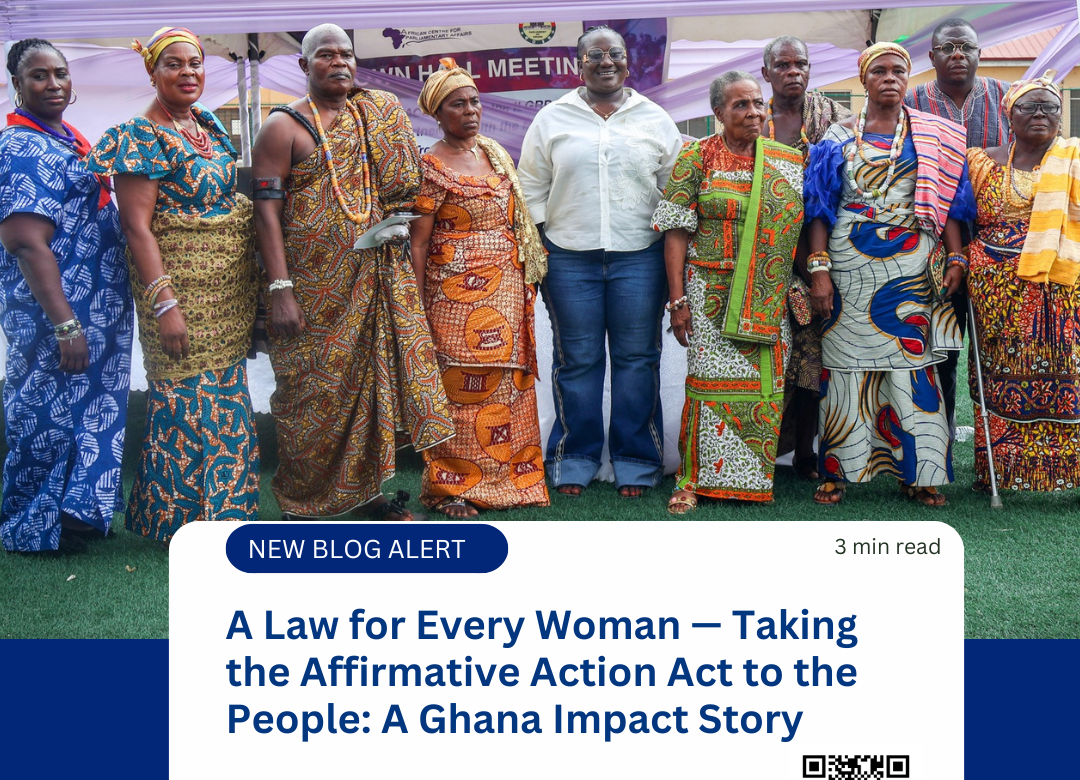
International Women’s Day 2026 was not just a celebration at Parliament. In Trobu Constituency, it became a moment of accountability, where citizens, traditional leaders, and the MP sat together to ask: What does this law actually mean for us?
The Problem
Ghana’s Affirmative Action (Gender Equity) Act, 2024 (Act 1121) represents a landmark commitment, mandating that women hold at least 30% of positions in key public and private decision-making roles by 2026. Yet awareness of the law at the community level remained limited, and the gap between policy commitment and lived reality remained wide.
The Intervention
Under the Inclusive Legislatures for Gender Responsive Policies (ILGRP) Project, ACEPA and the Parliamentary Centre, in collaboration with Hon. Gloria Owusu, MP for Trobu Constituency, and the Affirmative Action Coalition, convened a community town hall to mark International Women’s Day. The forum brought together traditional authorities and opinion leaders, community members, students, civil society, and development partners for an open, honest conversation about what the Affirmative Action Act means in practice.
The Change
Community members left with a clearer understanding of their rights under the Act, the obligations it places on institutions, and the role they can play in holding decision-makers accountable. Citizens raised pertinent questions and shared feedback that will inform ongoing advocacy and education efforts. The town hall demonstrated that the passage of a law alone is not enough; implementation requires community ownership.
By: Benedicta Naa Odarkor Ablateye