The African Centre for Parliamentary Affairs (ACEPA)’s ILGRP project team in Kenya organised working sessions with civil society organizations and women rights groups (CSO/WRGs) on effective engagement regarding parliamentary gender responsive oversight.
The practical sessions involved assessing gender gaps during post-legislative scrutiny and the impact of judicial outcomes on law-making; as well as exploring gender concerns that need to be addressed during the formulation/development/review of gender-responsive tools.
The session focused on the overview of Gender Equality Commitments in Kenya; progress made or milestones gained; gaps and/ or challenges. Using the Gender-based Analysis Plus (GBA-Plus), the CSO/WRGs reviewed legislation in relation to Persons with Disability; Learners with Disability; Child Parents, and Mitigation of Gender Based Violence and Sexual offenses. The gender analysis was informed by published auditor general reports where CSO/WRGs identified gender gaps and proposed solutions that are gender-responsive.
The project is implemented in partnership with The Parliamentary Centre, with funding support from Global Affairs Canada.
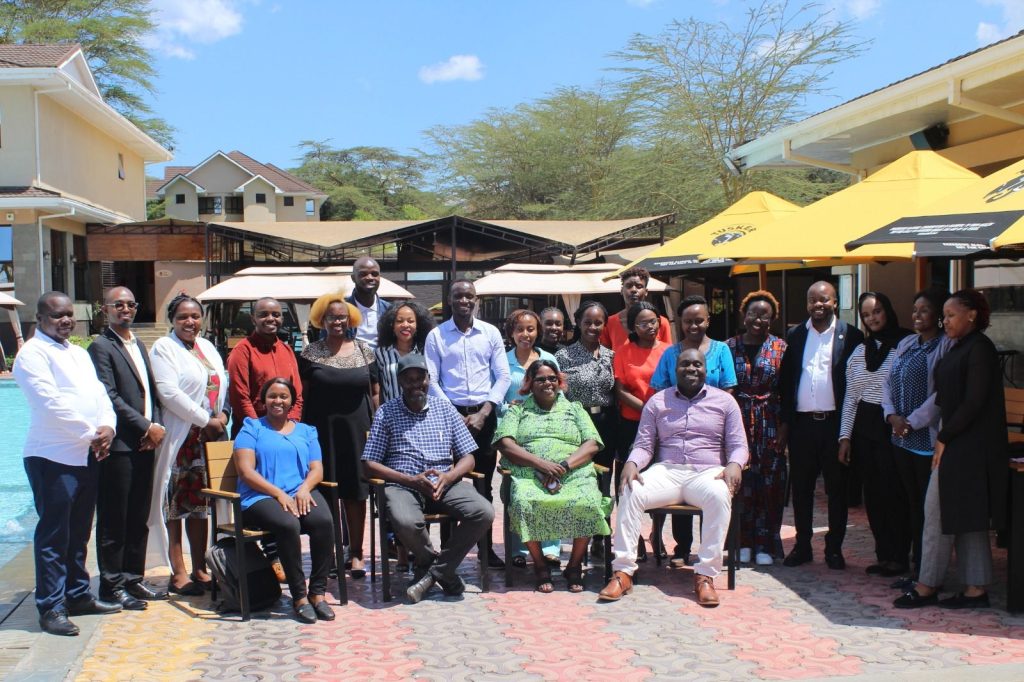
A group picture of participants