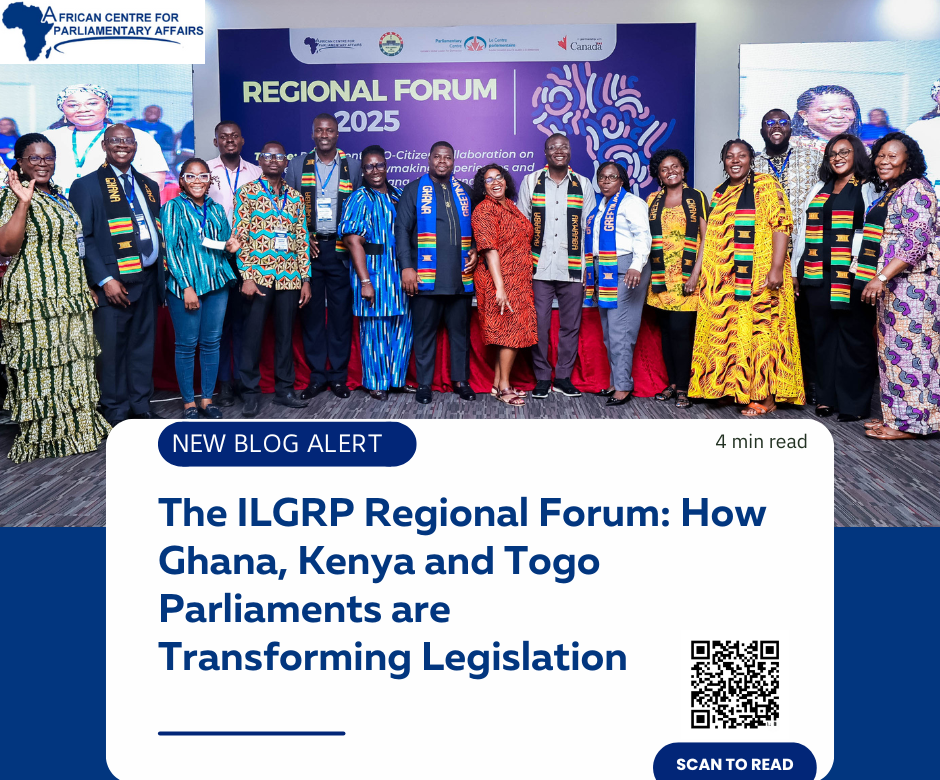
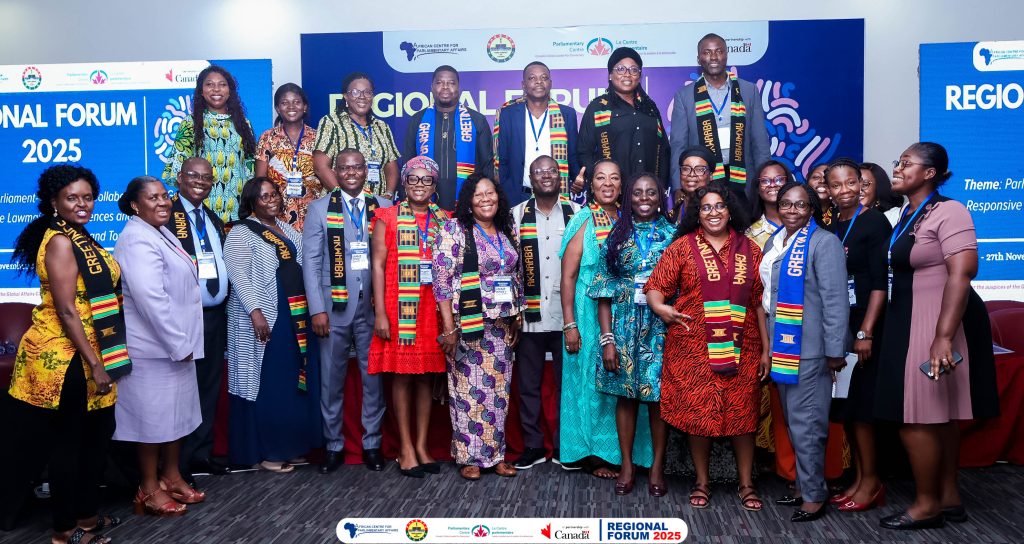
The November 2025 Inclusive Legislatures for Gender-Responsive Policies (ILGRP) Regional Forum in Accra was held to realize a simple but powerful vision: the most effective legislation emerges when diverse voices converge around shared values.
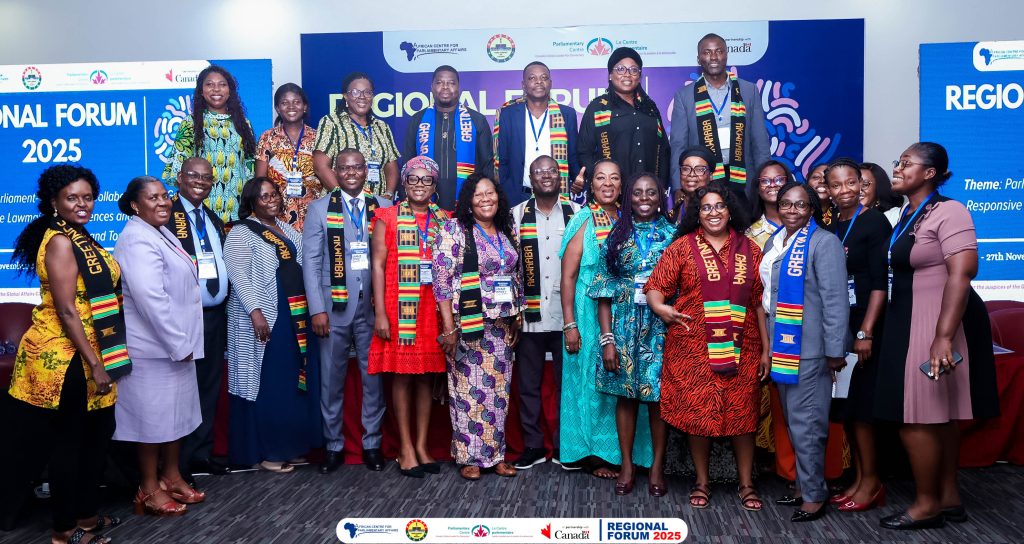
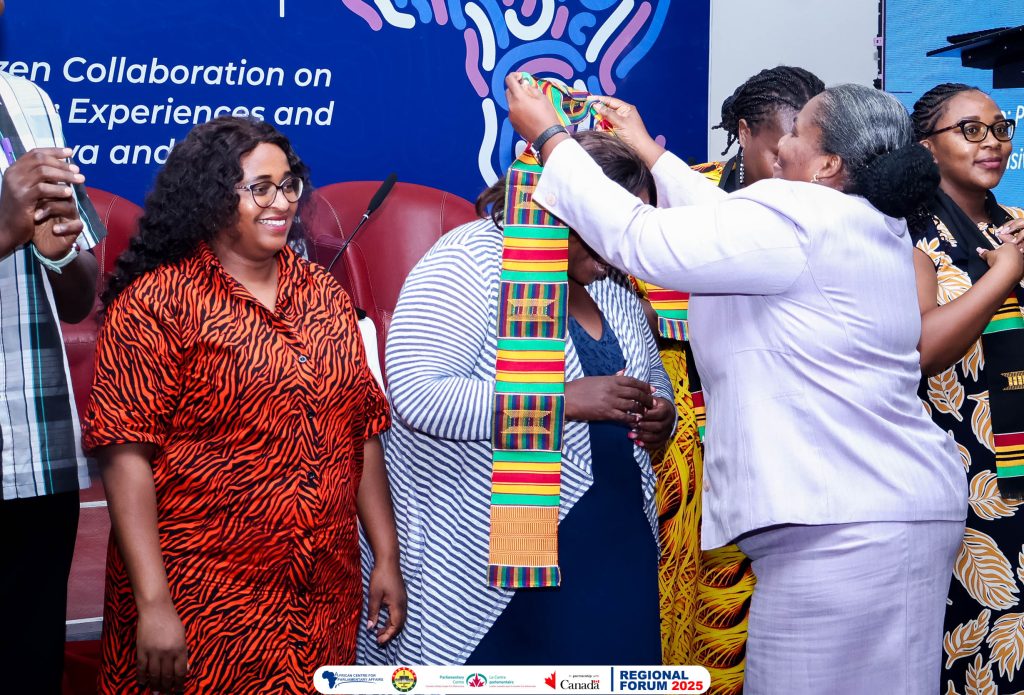
From the moment it began, the forum created a space for sharing experience, testing innovation, and strengthening inclusive parliamentary practice. The opening ceremony, attended by parliamentary leadership and Members of Parliament from Ghana, Kenya, and Togo, set a clear tone of collaboration and shared purpose.
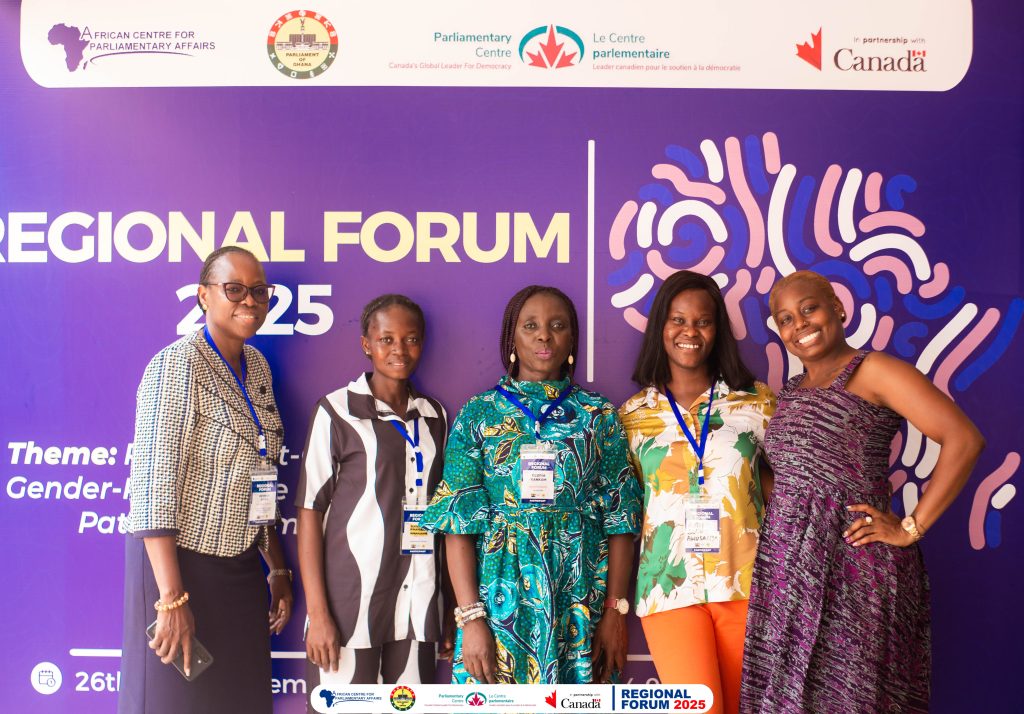
Co-organized by ACEPA and the Parliamentary Centre as part of the ILGRP project funded by Global Affairs Canada , the forum brought together parliamentarians, parliamentary staff, civil society organizations, and citizens committed to advancing gender-responsive legislation.
“The Parliament of Ghana, together with the Government of Canada, has a long-standing history of partnership that aims at strengthening the practices and procedures of our Fourth Republican Parliament. This current project in particular is timely.”
— Mr. Camilo Pwamang, Deputy Clerk, Parliament of Ghana
Two Days: Practical Solutions and Hands-On Innovation
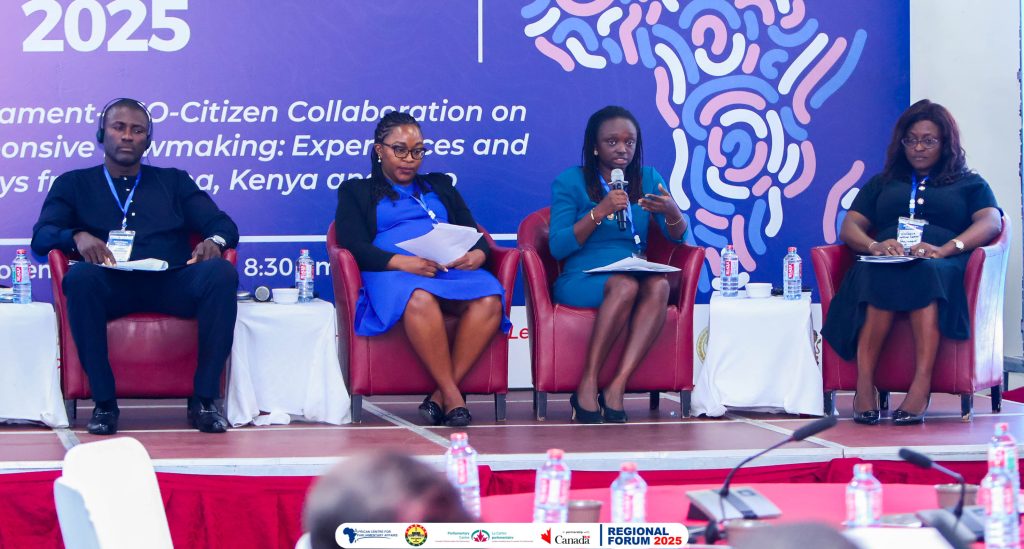
Panels throughout the first day traced national progress in addressing the needs of women and marginalized groups through legislative reform. While country contexts differed, a consistent lesson emerged: meaningful change was driven not by isolated initiatives, but by sustained partnerships between parliaments, civil society organizations, and engaged citizens.
The Parliament of Ghana’s Deputy Minority Leader, Madam Patricia Appiagye, brought this point to life in her keynote address when she highlighted the ILGRP project’s role in embedding gender-responsive approaches within parliamentary processes. “Women are the majority in this country, therefore it is important to always keep them in mind when taking decisions.”
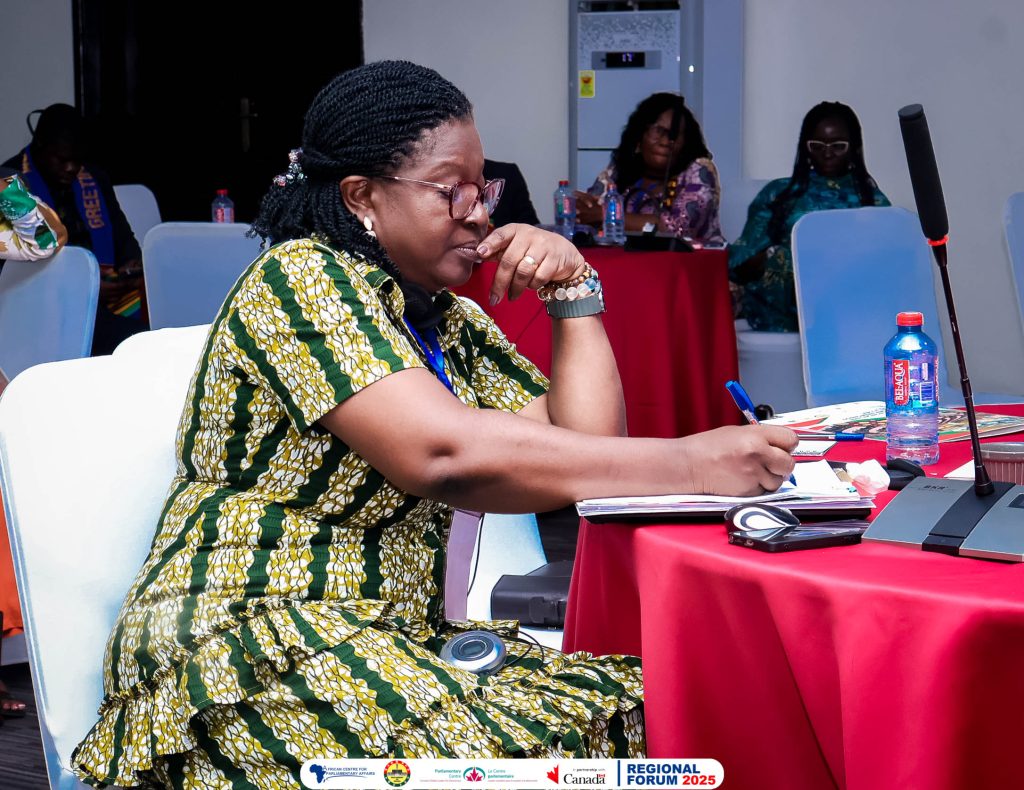
On the second day, discussions shifted from vision to practice. Morning sessions focused on citizen participation mechanisms, with civil society leaders from all three countries sharing how structured engagement had enabled ordinary citizens to influence legislative debates and policy outcomes. Their experiences underscored the importance of accessible, institutionalized channels for participation.
In the afternoon, attention turned to innovation in action. Multiple sessions explored new digital tools that parliamentarians, their staff, civil society organizations, and citizens could use as new ways to engage with core parliamentary mandates in real time. Kenya’s delegation showcased its mobile platform for citizen feedback, Togo’s representatives highlighted community dialogue mechanisms, and Ghana’s parliamentary staff presented innovative approaches to legislative oversight.
What Made This Forum Different?
Besides being the first regional event, the forum marked an important shift from general discussions on gender inclusivity to hands-on, solutions-based actions. Rather than only sharing reports and presentations, delegations discuss through live case studies, tested digital tools, and co-designed action points tailored to their respective parliaments. The event also recorded the highest number of participants, including members of parliament, parliamentary staff, civil society actors, and development partners, amongst others, ensuring that citizen perspectives shaped the recommendations produced.
As delegates departed Accra, they carried with them more than presentations and policy papers. They bore the collective wisdom of three nations committed to ensuring that every voice, regardless of gender, background, or circumstance, has a place in shaping the laws that govern their lives.
Key Lessons and Sources of Inspiration
Ghana mentioned how the project had helped in mainstreaming gender into law-making by gaining information from various and diverse groups in enriching the Affirmative Action Act and the Social Protection. Citizens’ legitimacy and the tools and models given to the Committee for scrutiny of social financing. The parliament of Ghana showcased a psychosocial health and wellness centre used by MPs and parliamentary staff as a way of promoting mental health and well-being in the workplace.
Kenya mentioned how complex and diverse its Parliamentary system is and how the project has supported technical, research, and capacity-building to ensure the Kenyan Parliament remains committed to its constitutional foundations, protocols, and other global, Regional, and National commitments towards gender equality.
Togo mentioned how timely the project had been to the Parliament of Togo, in regularizing the code of family, legal protection, and inheritance for Women.
The Regional Forum had ended, but its true impact was just beginning. In the weeks and months ahead, the seeds planted in those two days in November 2025 would grow into new legislation, stronger partnerships, and more inclusive democracies across West Africa.
Sometimes, the most profound change begins with the simple act of bringing people together. In Accra, those shared experiences have laid the groundwork for a more equitable future.